This paper examines the OCD-religious ritual stereotype in the context of the growth in popularity of the concept of spirituality. Religious ritual and obsessionality were famously confabulated by Freud in 1907. The stereotype has persisted, and empirical evidence for this is examined. The development of research on spiritual experience is outlined. The growing popularity of the term "spirituality" in the psychology of religion is also considered. Individualism may encourage individual spiritual experience over organised religion involving collective ritual and practice. The view of ritual as collective, and experientially void, by comparison with individual spirituality, is still prevalent. Recent research on ritual is described and discussed, indicating the experiential, emotional and spiritual accompaniments of religious ritual. This may raise questions about any alleged causal role played by religious ritual in exacerbating OCD.
Religious ritual as obsessional neurosis
This paper examines the OCD-religious ritual stereotype. The context is the growth in popularity of the concept of spirituality.
Freud’s hypotheses about religion were many (see the overview in the Freud Museum website, accessed 2017). They include religion as an attempt to master the Oedipus complex, a reaction to infantile helplessness, the echo of an infantile state of oneness, a mass delusion, and a way of holding groups together. All interesting, but for our present purposes, we examine one of Freud's earliest suggestions: religion as obsessional neurosis (1907, p. 117: Obsessive actions and religious practices)
"I am certainly not the first person to have been struck by the resemblance between what are called obsessive actions in sufferers from nervous affections and the observances by means of which believers give expression to their piety. The term 'ceremonial' which has been applied to some of these obsessive actions, is evidence of this."
This comparison was made several other times by Freud, for example in The Future of an Illusion Freud saw both individuals and civilisations, driven by anxiety, repressing and renouncing instinctual gratifications, such that " Religion would thus be the universal obsessional neurosis of humanity". (Freud, 1961 edition, p. 49). Freud saw some striking similarities: both religious rituals and obsessions involve guilt if neglected, they are uninterruptable, and require conscientiousness in every detail. However there are differences: religious ritual is more stereotyped, with less individual variation, religious ritual is (or maybe) communal not private, religious rituals full of significance and symbolic meaning (though according to Freud) ”ordinary worshippers … may give little thought to the significance of the actions they carry out”.
The religion-obsessionality stereotype has persisted. Are the research questions tested really Freud’s hypotheses? What does the empirical evidence indicate?
Does religion resemble an obsessional neurosis? Freud (1907, p. 119) indicated both “glaring differences” AND “resemblance between ... obsessive actions and (religious) observances”. There is clearly no clear hypothesis here! Does religion have many of the same functions as obsessionality, and could religion be the universal “obsessional neurosis which spares the individual the task of forming his/her own neurosis” (Freud, 1927)? This would be hypothesis 4 (below), which has not been tested and would be difficult to test.
Other predictions and hypotheses about the relations between religion and neurosis are unclear, although some have been tested empirically. Would there be a relationship between religion and neuroticism, anxiety and/or obsessionality? Could religious practice replace home-grown neurosis? Or does it foster neurosis? (Lewis, 1998).
The empirical evidence on each of these issues is mixed, with no clear support for hypotheses or answers to questions. This indicates the complexity of the issues.
A widespread suggestion is that religion can provide an arena for the expression of OCD, probably initiated by Greenberg and Witztum (1994). The causal role of religion in OCD is uncertain.
The rise of spirituality
Meanwhile, there has been rise in the popularity and use of the concept of spirituality and the use of the term "spiritual" in self-definition. There has been growth of research into spiritual experience, all this is possibly in association with the alleged superseding of collectivism by individualism. Also possibly related is the developing interest from cognitive scientists and others in the power of ritual. And the greater political correctness of referring to spirituality rather than religion in a multicultural society.
With regard to the rising interest in spirituality, it can be suggested that Western interest in non-Western religions and mystical experiences was fostered by the translations of Hindu, Buddhist and other writings from the later C19th onwards, together with works such as Huxley:The Doors of Perception (1954), and Castaneda's The Teachings of Don Juan (1968), the 1960s drug-induced mystical experiences culture, and the post World War II appearance of NRMs (New Religious Movements) and their study by sociologists and anthropologists of religion.
In the 1970s psychologists of religion were invited to enjoy research into extraordinary and spontaneous spiritual experiences. Leading researchers included Sir Alister Hardy (1979; Hay, 2011), a distinguished biologist who argued that spiritual experience was intrinsic feature of human biological make-up; in the USA, Ralph Hood Jr (1975) set out to assess spiritual experience and to examine the personality correlates of those who reported it; in the UK, David Hay (1994) and other Hardy disciples continued the collection and exploration of reported spiritual experience (Franklin, 2014).
The Hardy Religious Experience Research Centre, supported by the Alister Hardy Society for the Study of Spiritual Experience, still collects accounts given in response to the question “Have you ever been aware of a presence or power that is different from your everyday self?” (for example see, Lewis 2017a, 2017b).
Hood’s (1975) Mysticism Scale asks whether the individual has had an experience that they knew to be sacred, that transcended time and space (based on criteria proposed by the philosopher, Stace (1960), for introvertive mystical experience). Hood (1975) believes that mystical experiences can transcend linguistic/cultural constructions: transliminal.
In a recent article, Oana, Oana, and Anca (2009) identified five themes in young Romanian adults’ experience of spirituality. The first three themes were 1) spirituality as personal development 2) spirituality as inner personal world 3) spirituality as a relationship between the individual and the divine. I offer this as an example of the way spirituality is linked to individual experience.
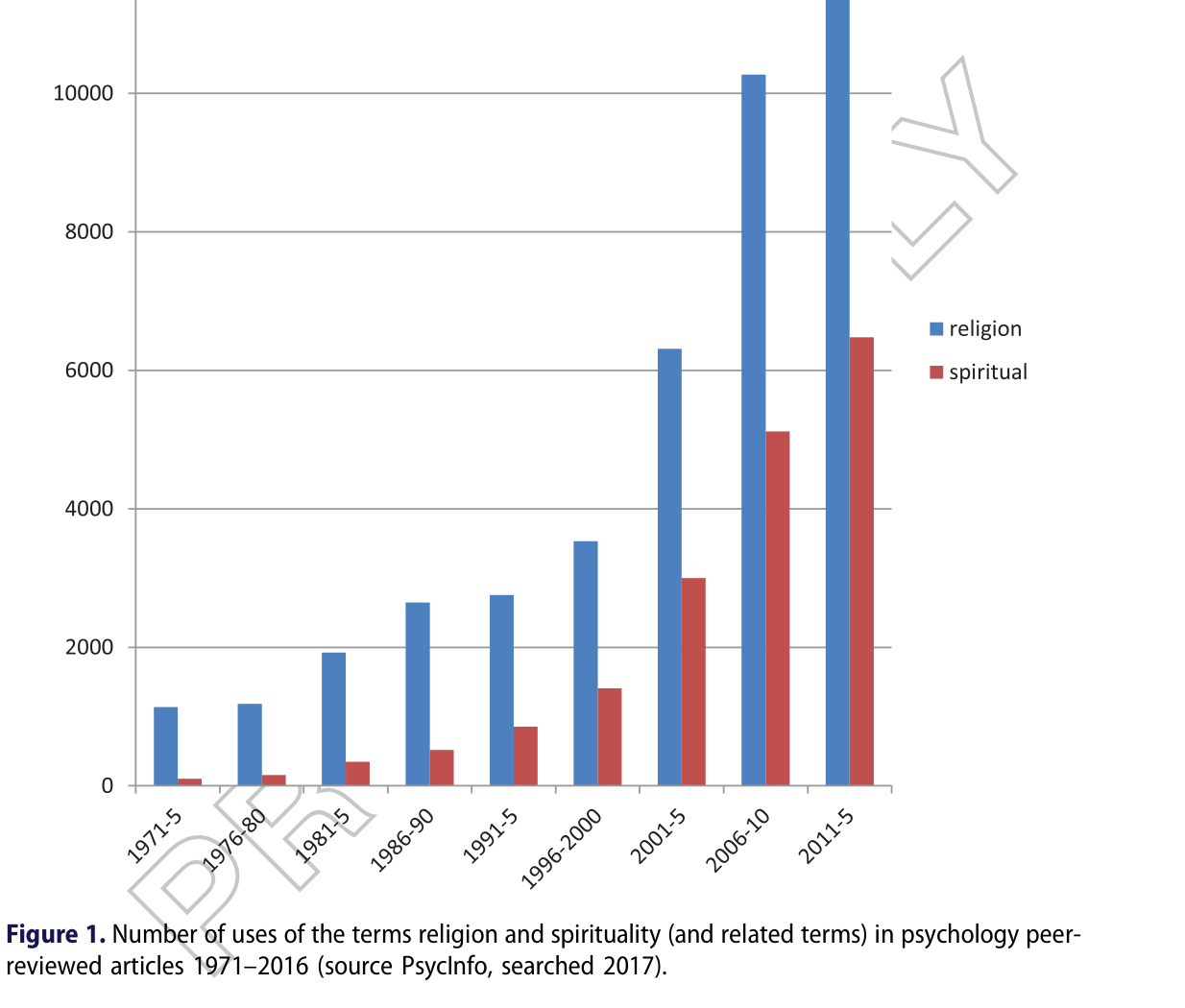
Figure 1 illustrates an aspect of the rise of spirituality: increased use of the term "spiritual" in psychological books and articles.
The rise in popularity of spirituality can be associated with the growth of spiritual-but-not-religious identity (SBNR) (e.g., Fuller, 2001; Mercadante, 2014). Empirically, it is not clear whether the proportion of SBNR is rising, but it is a significant minority, and is said to be rising. Some believe SBNR may be a Western phenomenon. The evidence is limited and basically cross-sectional. The overall proportion of SBNR in the general population is rather small. 20% of Americans were religiously unaffiliated in 2012, and of these 37% classified themselves as spiritual but not religious (Funk & Smith, 2012). This is approximately 7% of the population and is notably lower than the 19% SBNR reported in 1997 by Zinnbauer et al.
Are developments in Individualism and secularisation associated with the rise of spirituality? Woodhead and Heelas(2004) in The Spiritual Revolution: Why Religion is Giving Way to Spirituality, note the increasing numbers of people self-defined as spiritual but not religious. They propose the subjectivisation thesis, a shift away from roles and obligations towards subjective experiences: the “massive subjective turn of modern culture” (Taylor, 1991, p. 26), perhaps associated with post-modernity.
Meanwhile ritual has continued to be widely viewed as experientially and intellectually empty. A century after Freud’s (1907) assertions, Nelson, Rosenfeld, Breitbart, and Galietta (2002) concluded “the beneficial aspects of religion may be primarily those that relate to spiritual well-being rather than to religious practices per se” (p. 213).
A cluster has been formed, comprising: Ritual, collectivism and experiential sterility: is this stereotype still popular? Many semi-popular works (e.g., Fuller, 2001; Hogan, 2010; Woodhead & Heelas, 2004) suggest the sterility and hypocrisy of organised religion, implying that meaning can (only) be found in experiences of personal spirituality.
Further, individualism may be seen to encourage individual spiritual experience over organised religion involving collective ritual and practice. The view of ritual as collective, and experientially void, by comparison with individual spirituality, is still prevalent.
However many social and cognitive scientists, theologians and historians have emphasised the interest and power of rituals. For instance, Frankel (1946) discussed the role of ritual in encouraging sense of meaning and purpose, Whitehouse and Lanman(2014) and other cognitive scientists discuss the role of ritual in furnishing both social support and identity, and a number of authors, particularly Eliade (1967), Boyer (1994), McCauley (2001), and Hervieu-Leger (2001) have emphasised the importance of the interplay between ritual and memory, drawing attention to features of religious ritual including “eternal return”, memorability (fostered by minimal counterintuition), “chain of memory”, and nostalgia,
“In imitating … exemplary acts (of sacred characters) … or simply by recounting their adventures (man) detaches himself from profane time and magically re-enters the Great Time, the sacred time” (Eliade, 1975, Myths, Dreams and Mysteries, p. 23).
More prosaically: “… nostalgia can make people feel happier, can physically warm the body, can give people hope, and overall improve one’s life…it helps with relationships in general and in particular with marriage. Good memories make for good relationships ... " (Fink, 2015, )
So far, it has been argued that the past hundred years (approximately) have been dominated by a view of religion as comprising ritual which is experientially empty and meaningless, and similar to an obsessional neurosis. The same hundred years has seen a growth in the popularity of spirituality incorporating the opposite of these features: spirituality is experientially rich and meaningful, and free of neurotic compulsions.
We now turn to recent research in which the experiences of engaging in religious ritual have been examined. Meaningless and obsessional compulsion have not featured in these reports. Rather, emotional richness, and physical and mental health benefits have been indicated in the research to date.
Recent research on ritual
Idler, Boulifard, and Labouvie (2009) examined the reported effects of church attendance and participation in a North American sample. Reported religious experiences occurring during congregational worship services were studied. Respondents (N = 576) were mainly Christian, but there were some Jews, Muslims, Hindus and others, all adults, living in the USA. All were interviewed prior to cardiac surgery.
Attendance at religious services provides physical, emotional, social, and spiritual experiences that may promote physical health through multiple pathways. Seven factors associated with group worship were identified: social involvement/support, positive emotion/calm, daily devotional activity/prayer, belonging/bonding, belief/in divine, sad emotion/choked up, and purpose/meaning. The study of ritual could pay greater attention to the group/social aspects of ritual (Idler et al., 2009).
Superville, Pargament, and Lee (2014)examined how and why religion is associated with health through a focus on one specific aspect of religiousness (Sabbath-keeping) and four possible mediators (religious coping, religious support, diet, and exercise).
Sample of Seventh-day Adventists in North America was examined (N = 5,411): the association between Sabbath keeping and physical and mental health was partially mediated by all four mediators. Some mediators (religious coping and support) had a more salient effect on health than others, and it was also suggested that Sabbath observance had further effects on health additional to those of the mediators. Other mediators not measured (e.g., self-esteem, peace) may have had effects additional to those of the mediators assessed.
Dein and Loewenthal (2013) examined the reported mental health benefits of Sabbath observance among Jews in the UK and the USA. They interviewed 13 adult practising Jews about the benefits and costs of observing Shabbat/Shabbos and carried out a thematic analysis.
The main themes were: 1) Shabbos as a special day, giving time to contemplate on profound issues, 2) Withdrawal and rest from mundane concerns, and 3) deepening relationships.
These aspects can potentially improve feelings of mental well-being, and were indeed often said to do so.
“I completely unplug from the rest of the world. I shut down electronically. It’s a spiritual day. I focus on what matters most”.
“Shabbos is a safe haven. We step away from our worries and involvement with worldly activities. One is innately aware of an elevated atmosphere”.
“It is time to share with one’s family, children, friends and to enjoy the company of guests. There are no phone calls, e-mails, daily grind. It helps one to remember the inevitability of one’s mortality so I would hope with help to be better, kinder and more tolerant person”.
Loewenthal and Al-Solaim (2016)Interviewed 10 practising Muslim and Jewish women about head/hair-covering (required in both faith traditions). Three important themes were identified (J = Jewish woman, M = Muslim woman: 1) Spirituality/religious ruling: "Appreciating the mystical significance & tremendous benefits that such self-control can have" (J). "Wearing Hijab makes one more aware of God on a daily basis" (M). 2) Relations with men: "Provides a sense of privacy, modesty and morality" (M). "It helps create a kind of wall around the holiness of marriage" (J) 3) Identity: "It is also a good example to one’s children as to how we are a different people and have different ethics and code from others" (J). "To make Muslim women distinguishable from others (M)
Conclusions
Freud’s 1907 suggestions about the similarities (and differences) between OCD and religious ritual had a powerful impact, contributing to a popular idea that religious ritual is mindless and uninspiring. However Freud’s hypotheses about the relations between religion and OCD are not very clear. Empirically there is not a clear association between religiosity and OCD.
There has been a rise in scientific/psychological interest in exciting religious experiences which has helped to maintain the view of ritual as mindless habit.
Freud’s suggestion about the salient role of anxiety in driving the performance of religious ritual is made doubtful by the numerous suggestions by anthropologists, philosophers, sociologists, cognitive scientists, theologians and others regarding the emotions and motivations involved in ritual. Some psychological work on ritual has suggested the need for further work in examining its psychological benefits.
Conflict of interest: None
Acknowledgement
This paper was heavily influenced by, and based on a paper given by the author in the University of Goteborg, Sweden, in January 2017 entitled “Was Freud right?” I am grateful to Dr Elisabeth Punzi of the Clinical Psychology Department in the University of Goteborg for encouraging my interest in the topics discussed here. The Goteborg paper was developed into a paper given in a Symposium on OCD and Religion, at the International Association for the Psychology of Religion, Hamar, Norway, August 2017. My initial interest in OCD and religion was strongly encouraged by the 1998 paper by Professor Christopher Alan Lewis, cited in the references.
References
Boyer, P. (1994). The naturalness of religious ideas. Berkeley, CA: University of California Press.
Dein, S., & Loewenthal, K. M. (2013) The mental health benefits and costs of Sabbath observance among orthodox Jews. Journal of Religion and Health, 52, 1382-1390. doi.org/10.1007/s10943-013-9757-3
Eliade, M. (1975) Myths, dreams and mysteries. New York, NY: Harper & Row.
Franklin, J. (2014). Exploration Into spirit: A power greater than ..: The history of the Alister Hardy Religious Experience Research Centre and Society origins, development and vision. Lampeter: Alister Hardy Society for the Study of Spiritual Experience.
Freud Museum London. Freud and Religion. (accessed 24 October 2017)
Freud, S. (1907) Obsessive actions and religious practices. Originally published in Zweitschrift Religionpsychologie, 1, 4-12. English translation R.C. McWatters, 1924 In The standard edition of the complete psychological works of Sigmund Freud, Volume IX, pp. 117-126.
Freud, S. (1961). The future of an illusion. Translated J.Strachey. New York, NY: W.W.Norton.
Fuller, R. (2001). Spiritual but not religious: Understanding unchurched America. Oxford: Oxford University Press.
Greenberg, D., & Witztum, E. (1994). The influence of cultural factors on obsessive-compulsive disorder: Religious symptoms in a religious society. Israel Journal of Psychiatry, 31, 211-220.
Hardy, A. C. (1979). The spiritual nature of man: A study of contemporary religious experience. Oxford: Clarendon Press.
Hay, D. (1994). “The biology of G-d”: What is the current status of Hardy’s hypothesis? International Journal for the Psychology of Religion, 4, 1-23.
Hay, D. (2011). G-d’s biologist. London: Darton, Longman & Todd.
Hervieu-Leger, D. (2001). Religion as a chain of memory. New Brunswick, NJ: Rutgers University Press.
Hood, R. W., Jr. (1975). The construction and preliminary validation of a measure of reported mystical experience. Journal for the Scientific Study of Religion, 14, 29-41.
Huxley, A. (1954). The doors of perception. London: Chatto & Windus.
Idler, E., Boulifard, D., & Labouvie, E. (2009). Looking inside the black box of "Attendance at services": New measures for exploring an old dimension in religion and health research. International Journal for the Psychology of Religion, 19, 1-20. doi.org/10.1080/10508610802471096
Lewis, C. A. (1998). Cleanliness is next to Godliness: Religiosity and obsessiveness. Journal of Religion and Health, 37, 49-61. doi.org/10.1023/A:1022913117655
Lewis, C. A. (2017a). Mental health, religious experience, and culture: Examining the varieties of religious experience. Mental Health, Religion & Culture, 20(4), 295-298. doi.org/10.1080/13674676.2017.1363145
Lewis, C. A. (Ed.). (2017b). Mental health, religious experience, and culture: Examining the varieties of religious experience [Special Issue]. Mental Health, Religion & Culture, volume 20, edition. 4 (ISSN 1367-4676). doi.org/10.1080/13674676.2017.1363145
Loewenthal, K. M., & Solaim, L. (2016). Religious identity, challenge, and clothing: Women’s head and hair covering in Islam and Judaism. Journal of Empirical Theology, 29, 160-170.
Mercadante, L. (2014) Belief without borders: Inside the minds of the spiritual but not religious. New York, NY: Oxford University Press.
McCauley, R. N. (2001). Ritual, memory, and emotion: Comparing two cognitive hypotheses. In J. Andressen (ed.), Religion in mind: Cognitive perspectives on religious belief, ritual, and experience. Cambridge: Cambridge University Press.
Nelson, C. J., Rosenfeld, B., Breitbart, W., & Galietta, M. (2002). Spirituality, religion, and depression in the terminally ill. Psychosomatics, 43(3), 213-220.
Oana, N., Oana, N., & Anca, M. (2009) Understanding spirituality: An exploratory study on Romanian youth and new methodological directions. European Journal of Science and Theology, 5, 53-66.
Stace, W. T. (1960). Mysticism and philosophy. Philadelphia, PA: Lippincott.
Superville, D. J., Pargament, K. I., & Lee, J. W. (2013). Sabbath keeping and its relationships to health and well-being: A mediational analysis. International Journal for the Psychology of Religion, 24, 241-256. doi.org/10.1080/10508619.2013.837655
Taylor, C. (1991). Ethics of authenticity. Cambridge, MA: Harvard University Press. .
Whitehouse, H., & Lanman, J. A. (2014). The ties that bind us: Ritual, fusion, and identification. Current Anthropology, 55, 1-23. doi.org/10.1086/678698
Woodhead, L., & Heelas, P. (2004). The spiritual revolution: Why religion is giving way to spirituality. London: Wiley.
Zinnbauer, B. J., Pargament, K. I., Cole, B., Rye, M. S., Butter, E. M., Belavich, T. G., Hipp, K. M., Scott, A. B. & Kadar, J. L. (1997). Religion and spirituality: Unfuzzying the fuzzy. Journal for the Scientific Study of Religion, 36, 549-564.